Lockheed F-94B Starfire
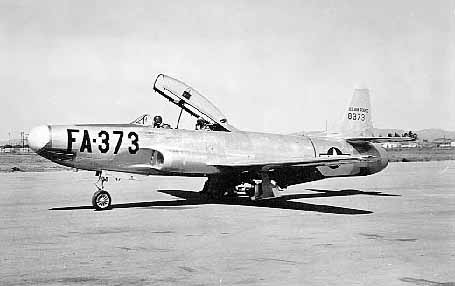
The Lockheed F-84 Starfire was a two-seat, single-engine, all-weather jet fighter that was used by the US Air Force during the Korean War. The Starfire was based on the T-33 with a more powerful engine and a lengthened fuselage to make room for fire-control radar. A prototype of the Starfire first flew on 16 April 1949, and it entered service with the US Air Force on 29 December 1949.
The F-94B, the version used during the Korean War, had a 6,350-lb thrust engine giving it a maximum speed of 640 mph. It was armed with four 0.50-inch machine-guns.
Starfires first arrived in Korea in May 1952 where they served as night-fighters with two US Air Force squadrons – the 319th and 68th Fighter-Interceptor Squadrons. Initially, the Air Force tried to use the Starfire to intercept North Korean night raiders, but the F-94 was too fast and unmaneuverable to cope with the piston-engined Po-2s and Yak-18s the North Koreans used. In November 1952 The Air Force began using Starfires to protect B-29 night raids from MiG-15s. They shot down four MiGs, and were so successful at protecting B-29s that no B-29s were lost to enemy action after January 1953.
The F-94 remained in US Air Force service as a night-fighter and all-weather fighter until 1959.